
Media Coverage
Fernando Arciniegas y el ascenso del cine iberoamericano desde Miami
April 30, 2026 • Fama News Magazine
Fama News Magazine profiles IAFFM founder Fernando Arciniegas and the festival's role in connecting Ibero-American cinema, Miami audiences, and the new Anthologies program.
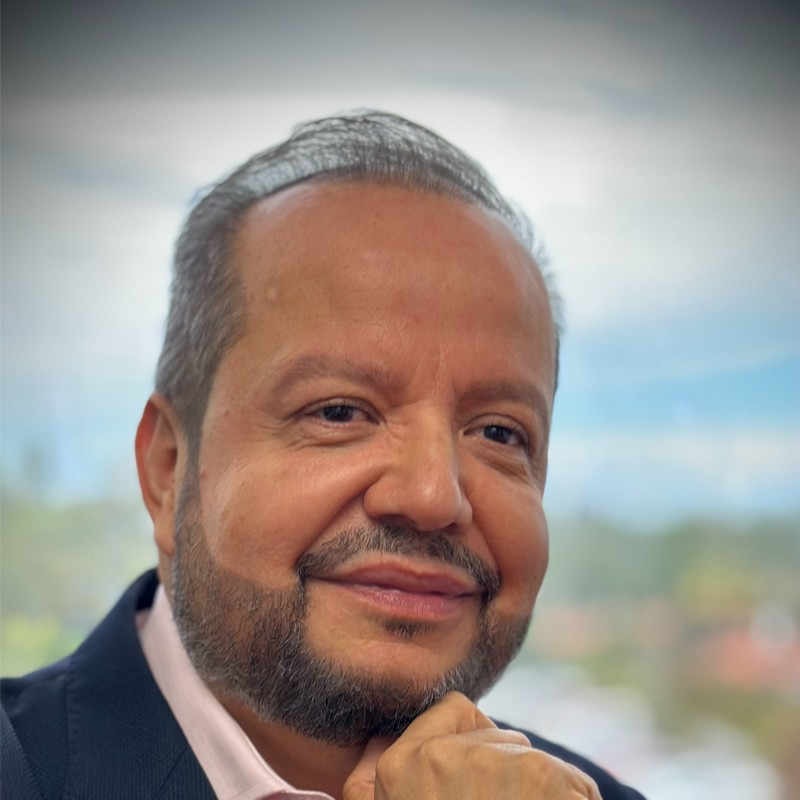
Fama News Magazine presents Fernando Arciniegas, founder and director of the Ibero-American Film Festival Miami, as a cultural builder whose work has helped give Ibero-American cinema a stronger platform in Miami.
The profile frames Miami as more than the festival's home base. In a city shaped by constant migration, reinvention, and cultural overlap, Arciniegas has used Miami as a bridge between filmmakers, industry voices, and audiences across the Americas, Spain, and Portugal.
Born in Villavicencio, Colombia, Arciniegas arrived in the United States in 1978. Fama describes that move as the beginning of a long relationship with Miami, a city that would later become the center of his work to expand visibility for Ibero-American storytelling.
Over more than eight years, IAFFM has grown beyond a screening event into a larger cultural platform. The article notes that the festival has brought together filmmakers from more than 20 countries and has built a space where artistic voices, industry relationships, and audience connection can meet.
At the heart of the profile is Arciniegas' view of cinema as a form of connection. Fama emphasizes that his work is not only about presenting films, but about creating conditions where people can encounter stories together, talk about them, and understand culture through a shared experience.
That idea carries directly into Anthologies, IAFFM's new curated program. The article presents Anthologies as a more intimate extension of the festival, designed to return attention to the essential relationship between film and viewer.
Anthologies will take place May 15-17 at the Koubek Center in Miami. Rather than competing with the scale of the main festival, the program is positioned as a complementary experience: smaller, more focused, and built around careful curation, closeness, and dialogue.
Fama also connects Arciniegas' festival work to the broader mission of Iberoamerican Film, Arts & Festival, Inc. Through that nonprofit structure, IAFFM supports exhibition, cultural exchange, and industry-facing initiatives that create meeting points between artists and professionals.
The article specifically points to the Ibero-American Audiovisual Market as part of that wider vision. In this model, the festival is not only a place to watch films, but also a space where the creative and business sides of the audiovisual world can develop relationships organically.
Arciniegas' profile extends beyond cinema. Fama highlights his decades of experience in health care, his entrepreneurial background, and his philanthropic work in Latin America as part of the same larger pattern: building projects where social impact, sustainability, and culture can reinforce each other.
The article closes by positioning IAFFM within a changing media landscape. As digital platforms transform how audiences consume content, Fama argues that the festival's value lies in something streaming cannot fully replace: the shared, in-person experience of cinema.
Through that lens, Anthologies becomes more than a program announcement. It reflects IAFFM's ongoing effort to keep evolving while preserving the human connection at the center of its mission, projecting Ibero-American cinema from Miami to a wider world.